Research
Why I research play.
Because it's a serious human capability for navigating uncertainty, learning and adapting. And I wanted more evidence to back that.

RMIT UNIVERSITY
Play at Work: Integrated Industry Report
The culmination of the Culture Hero x RMIT University research partnership. The full evidence base on play as a practice, not a perk, and what it means for how organisations learn, change and perform.
The snapshot
Play is a Work Practice
A shorter read from the same research - what the evidence says about play as an everyday work practice, and why it belongs in how organisations actually operate.
Playful Work Design
Most leaders think play is a nice-to-have.
It's a biological necessity.
The research on play, on how it shapes the brain, what it produces in teams and what happens to organisations when they systematically remove it, is substantial, and largely unseen by the people who need it most.
I'm here to change that.
Playful Work Equation
The Playful Work Equation.
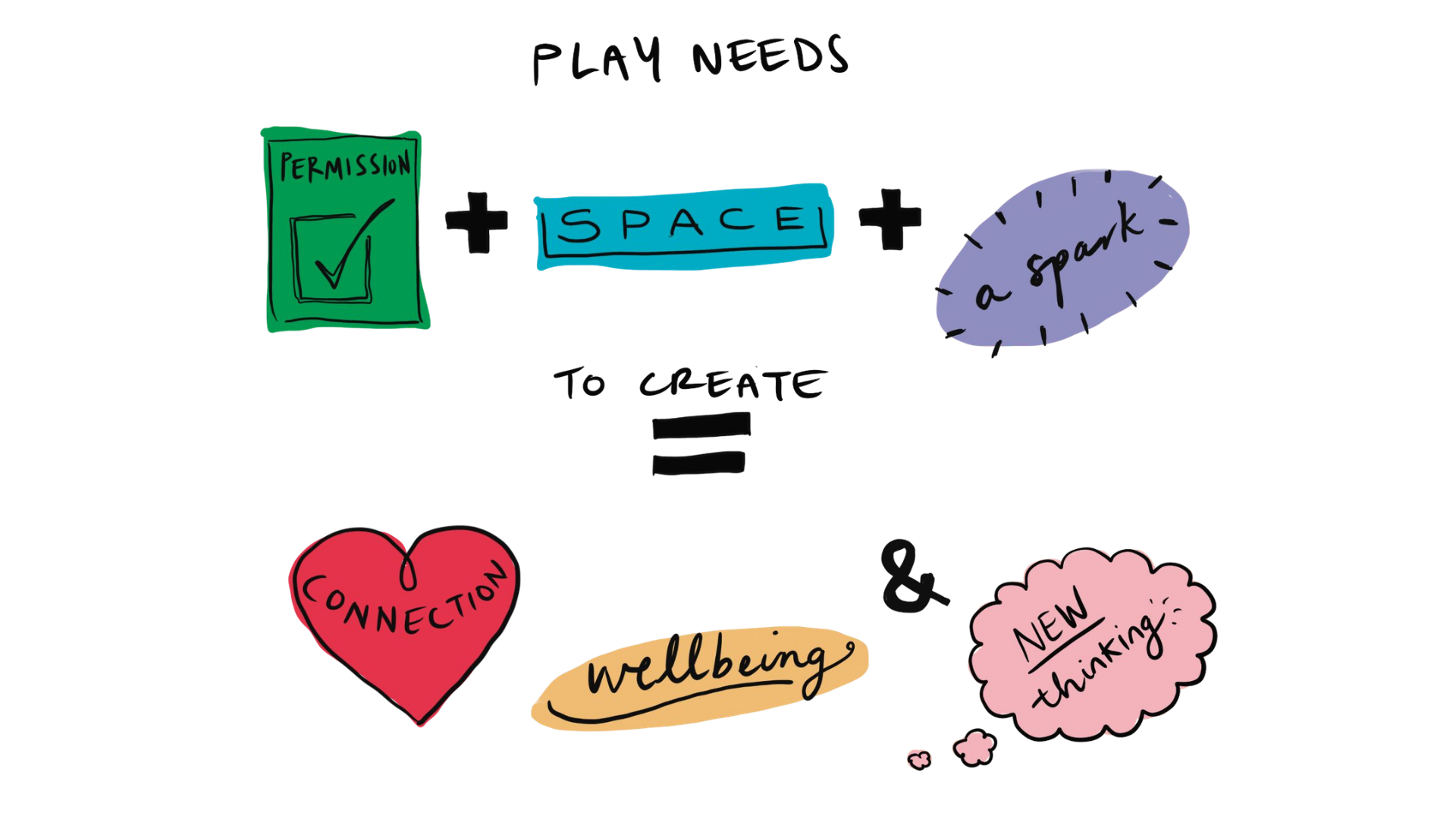
In collaboration with a global toy foundation, I led research across seven international organisations - including IKEA, World Vision and Sesame Workshop - to understand what actually enables play at work.
The answer turned out to be three things: Permission, Space and a Spark.
Miss one and the whole system breaks down. A spark without space becomes a one-off event. Permission and space without a spark means people wait for someone else to go first. All three together and something remarkable happens: connection deepens, wellbeing improves and new thinking emerges - measurably, repeatedly, across cultures and industries.
That framework is called the Playful Work Equation. It's the foundation of how I design every experience I deliver.
The Playful Work Equation has been covered in SmartCompany, one of Australia's leading publications for business leaders and entrepreneurs.
Read the article →Study 02
Full Stack Human.
Full Stack Human (Wiley, 2026), co-authored with Tāne Hunter, is where the research and the lived experience meet. It's the most complete articulation of what a decade of work, study and genuine personal reckoning has produced.
It argues that the capabilities organisations need most right now - adaptability, curiosity, hope, play - aren't soft skills. They're the architecture of human performance. And most organisations are accidentally dismantling them.
I'm not a researcher, I'm a playful practitioner who kept asking why and set out to answer my own question.\u00a0
If you want to go deeper into any of this work, I'm always up for a conversation.